
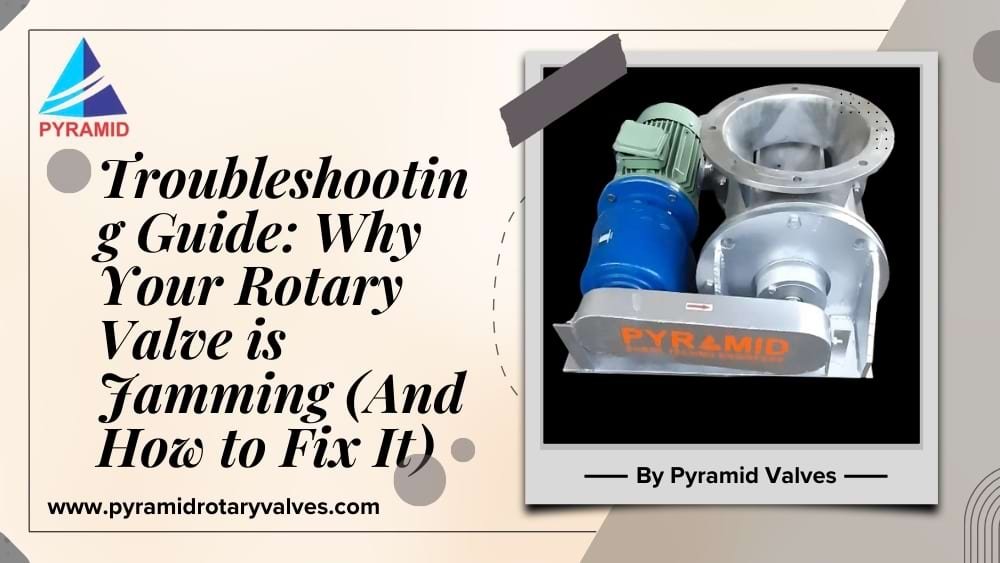
A stalled rotor is more than a minor inconvenience; in a Coal Handling Plant System, it can lead to a complete furnace shutdown. When a Pyramid rotary valve—or any airlock—stops turning, it is usually a symptom of an underlying system issue.
As a leading manufacturer, Shree Techno Engineers has identified the four most common reasons for rotor jams and the technical steps to resolve them.
1. Material Over-Packing and “Bridging”
If the material flow is too high or the valve is sized incorrectly, the pockets can overfill, causing material to compress between the rotor and the housing.
- The Fix: Check your TPH (Tons Per Hour) requirements. If you are handling sticky biomass in a Fuel Handling Plant, you may need to install a Stainless Steel Rotary Valve with a scraper rotor to prevent buildup.
- Prevention: Ensure your industrial coal feeder is not being flood-fed beyond its volumetric capacity.
2. Thermal Expansion (Heat Binding)
In high-temperature applications, such as bottom ash removal near a boiler, the metal of the rotor expands faster than the housing. This causes the rotor to seize against the body.
- The Fix: If the valve jams only when the system is hot but turns freely when cold, you have a clearance issue.
- Prevention: Shree Techno Engineers provides specialized high-temperature clearances. We can adjust the tolerances on your Cast Iron Rotary Valve to account for thermal growth up to 400°C.
3. Foreign Object Obstruction
Stray bolts, welding slag, or oversized coal chunks can get wedged between the rotor vane and the housing inlet.
- The Fix: Shut down power and use proper lock-out/tag-out safety protocol. Access the inspection port to remove the debris.
- Prevention: Install a magnetic separator or a coarse screen upstream of your MS fabricated airlock to catch tramp metal before it reaches the valve.
4. Bearing or Seal Failure
Sometimes the jam is not in the housing at all. If the outboard bearings seize due to lack of lubrication or dust contamination, the motor will stall.
- The Fix: Check the drive chain. If the motor turns but the valve does not, the shear pin or coupling may have broken to protect the motor. If the shaft will not move even with the chain removed, the bearings are likely the cause.
- Prevention: Follow a strict lubrication schedule and use air-purged seals for fine fly ash discharge applications.
Quick Diagnosis Checklist
| Symptom | Potential Cause | Recommended Action |
|---|---|---|
| Humming motor, no movement | Mechanical jam or seized bearing | Check for foreign objects; inspect bearings. |
| Valve jams only at peak temperature | Thermal expansion | Increase rotor-to-housing clearances. |
| Frequent shear pin breakage | Over-capacity feeding | Reduce RPM or check for slug loading. |
| Squealing noise before stall | Seal friction or lack of lubrication | Lubricate bearings and check gland packing. |
Conclusion: Don’t Force It
If your valve jams, forcing the motor can lead to a bent shaft or a burnt-out gearbox. Understanding the root cause behind the stall is the first step to a permanent fix. At Shree Techno Engineers, we build the Pyramid brand to be rugged—but even the best valves require proper operating conditions.
 Users Today : 4
 Users This Month : 212
 Total views : 4634