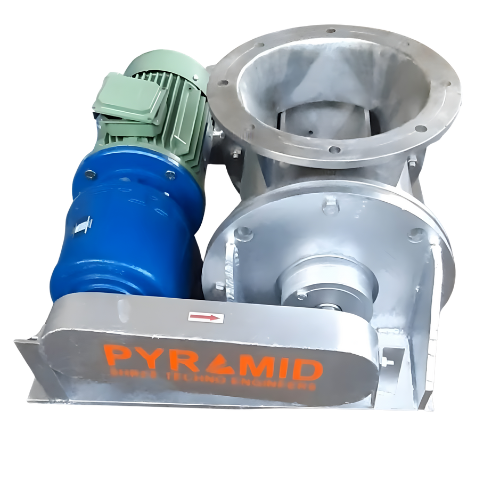
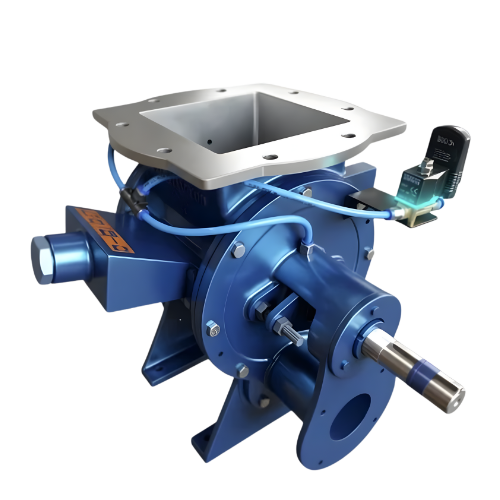
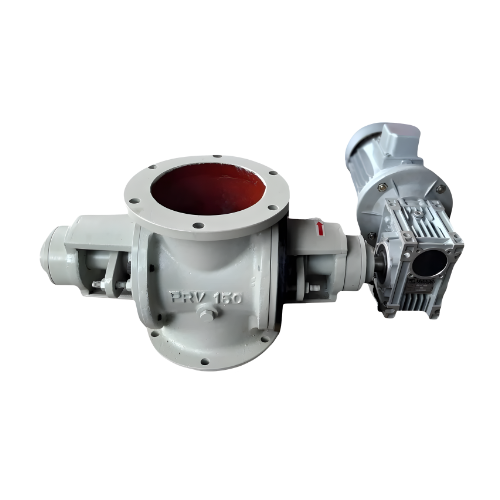
Rotary valves are essential components in material handling, acting as the “heart” of the system to regulate the flow of powders and granules. By maintaining a consistent airlock seal, they prevent pressure loss and ensure smooth discharge from hoppers and silos. Whether handling abrasive minerals or sensitive food-grade materials, a high-quality rotary valve is key to minimizing downtime and maximizing operational efficiency.
Rotary Valve
Shree Techno Engineers(Pyramid Rotary Valves) involved in manufacturing & delivering high-precision Rotary Valves for bulk material handling systems. Our rotary valves are engineered for efficiency, durability, and airtight sealing, acting as the heart of pneumatic conveying lines, dust collection units, and bulk processing plants worldwide.
Rotary valves are essential components in bulk solids handling systems, where they control the flow of powders, grains, pellets, and other dry materials from silos, hoppers, cyclones, or filters. By maintaining an airtight seal, they not only ensure smooth and consistent material transfer but also stabilize pressure in pneumatic conveying lines and reduce dust escape. In short, these valves are the critical link between storage and processing equipment in any bulk material handling setup.
Our manufacturing process in Ahmedabad focuses on Precision Clearances. We maintain a strict rotor-to-housing tolerance of 0.004” to 0.006” (0.10mm to 0.15mm). This minimizes air leakage (blow-back), ensuring your system maintains its pressure or vacuum integrity.
Most “standard” valves fail because of poor clearances. A gap too wide leads to air leakage, which kills your system’s efficiency. A gap too tight leads to jamming. We find the “sweet spot” with CNC-machined rotors held to a tolerance of 0.1mm, ensuring a perfect seal whether you’re handling fine pharmaceutical powders or abrasive fly ash.
Choosing a Rotary Valve Manufacturer is about trust. We provide full Material Test Certificates (MTC) and perform a rigorous 4-hour dry-run on every unit before it leaves our facility. Whether you need a single 150NB valve for a local project or a complete set of 600NB valves for an export plant, we deliver the same precision engineering that has made Shree Techno Engineers a trusted name since 2002.

Rotary Valve Types

Stainless Steel Rotary Valve
The "Hygienic & Corrosive" Specialist
- Material: SS 304 / SS 316 / SS 316L.
- Unique Feature: Mirror-Polished Internals. Unlike cast valves, our SS valves are finished to prevent bacterial growth and material "smearing."
- Best For: Pharmaceutical powders, food-grade ingredients (sugar, flour), and corrosive chemical handling.
- Key Advantage: Resistance to oxidation and easy wash-down compatibility for GMP-compliant facilities.
If your priority is purity and hygiene, our Stainless Steel series is your best ally. We understand that in the Food and Pharma sectors, even a tiny amount of contamination is a disaster. That’s why our SS rotary valves feature mirror-polished internals and easy-clean designs that prevent material "smearing" and bacterial growth.

Mild Steel Rotary Valve
The "Heavy-Duty Fabrication" Specialist
- Material: IS 2062 Grade Mild Steel.
- Unique Feature: Hard-Faced Rotor Tips. We apply specialized coatings (like Stellite or Tungsten Carbide) to the MS rotor vanes to increase wear resistance.
- Best For: Non-corrosive industrial minerals, plastic pellets, and dry grain handling.
- Key Advantage: The most cost-effective solution for large-scale bulk handling where chemical corrosion is not a risk.
For rugged, everyday industrial use, our Fabricated Mild Rotary Steel valves offer the best balance of cost and durability. These are the workhorses of the plastic and grain industries. We reinforce our MS rotors with hard-faced tips, giving you a heavy-duty solution that stands up to constant use without the premium price tag of exotic alloys.

Cast Iron Rotary Valve
The "Abrasive & High-Pressure" Specialist
- Material: Graded Cast Iron (FG 200/260).
- Unique Feature: Vibration Dampening. The natural density of Cast Iron absorbs the mechanical micro-vibrations from high-RPM blowers, leading to a longer bearing life.
- Best For: Fly Ash handling, cement, sand, and abrasive mining materials.
- Key Advantage: Superior structural rigidity. These valves maintain their shape under high-pressure differentials (up to 15 PSI) better than fabricated steel.
In high-pressure environments like Cement or Ash Handling, you need the "muscle" of Cast Iron. Our CI Rotary valves are built to handle the heat—literally. With Outboard Bearings that stay cool even when the material is 400°C, these valves provide the structural rigidity needed to prevent housing distortion under high-pressure differentials.
Rotary Valve FAQ's
Selection depends on the bulk density of your material, the required Tonnes Per Hour (TPH), and the pressure differential of the system. Use the formula:
Capacity (m³/hr) = Volume per Revolution × RPM × 60 × Efficiency Factor
While used interchangeably, a Rotary Valve is often used for feeding/metering, while a Rotary Airlock is specifically designed to prevent air leakage between two different pressure zones.
Yes. For abrasive materials like fly ash or cement, we provide Ni-Hard liners and hardened rotor tips to extend the life of the valve.
Most failures are caused by bearing contamination or improper clearances. Our Air-Purge Seal options prevent fine dust from entering the gland area, solving this problem at the source.
Yes. We offer Scalloped Rotors for sticky materials and Adjustable Tips (Teflon or Bronze) for systems requiring a zero-leakage seal.
Read Out Detailed Blog on Rotary Valves
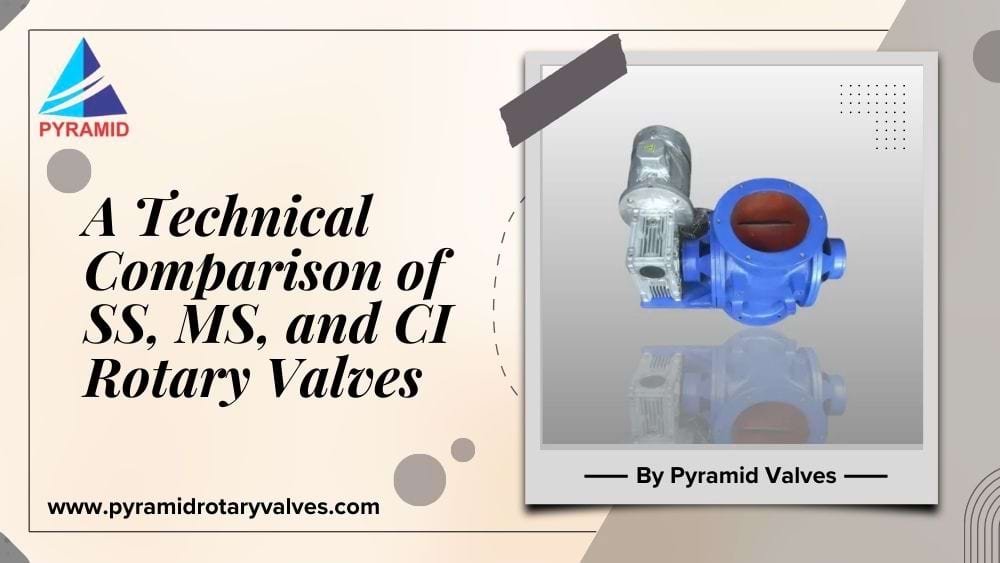
Not all rotary valves are created equal. This technical guide compares SS, MS, and CI materials for industrial applications. Learn how to choose the right MOC for abrasive ash or corrosive fuel handling based on durability, thermal stability, and precision requirements.
Prevent unexpected breakdowns in your fuel and ash lines with our comprehensive rotary valve maintenance guide. Shree Techno Engineers shares expert tips on inspecting rotor clearances, lubricating outboard bearings, and maintaining the airtight seal of your Pyramid brand equipment.