
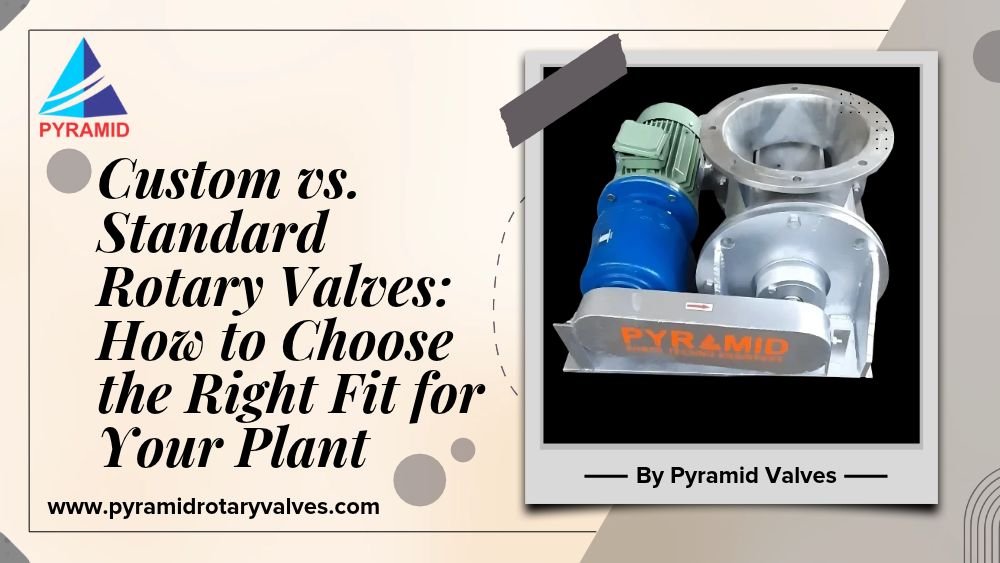
When replacing an aging rotary airlock or designing a new bulk material handling line, one of the first decisions engineering teams face is choosing between a standard off-the-shelf rotary valve and a custom-engineered solution.
While standard units offer quick availability, rigid plant layouts or abrasive materials often demand a tailored approach. At Shree Techno Engineers, we manufacture both standard configurations and fully customized rotary airlock valves under brand name Pyramid. Here is how to decide which option aligns with your operational needs.
1. Dimensional Compatibility and Drop-In Replacements
In plant retrofits, modifying existing ductwork, silos, or hoppers to accommodate a new valve size can add significant downtime and labor costs.
- Standard Rotary Valves: Designed to universal square or round flange patterns (such as standard ANSI or ISO bolt circles). These work well for new installations built to common dimensional specs.
- Custom Rotary Valves: If you are replacing an older imported unit or working within tight vertical space constraints, Shree Techno Engineers can manufacture a custom height, overall length, and bolt-pattern layout. This creates a true “drop-in replacement” that bolts directly onto your existing flanges without field cutting or welding.
2. Material and Media Characteristics
Standard valves are typically built for dry, free-flowing materials operating under normal ambient conditions. However, many industrial applications present severe operating environments:
- High Temperature: Handling hot bottom ash from a boiler requires special thermal expansion allowances. A custom valve build will feature adjusted rotor clearances and outboard high-temperature bearings to prevent rotor binding as metal expands.
- Corrosive or Sticky Media: Handling biomass, wet fuels, or chemical-laden dust often requires upgrading from Cast Iron to specialized Stainless Steel grades (such as SS 304 or SS 316) paired with internal non-stick coatings or scraper rotor vanes.
3. Material Throughput and Drive Options
A mismatch between feeder speed and material density can result in either material bridging or excessive internal wear.
- Standard Setup: Comes with fixed-speed gear motors designed for standard material flow rates (Tons Per Hour).
- Custom Engineering: We match the drive type to your exact process demands. Whether your layout calls for a compact direct-coupled gear drive, a chain drive for shock-load protection, or Variable Frequency Drive (VFD) compatibility for adjusting feed rates on the fly, customized drive packages ensure consistent volumetric control.
Quick Comparison Matrix
| Feature | Standard Rotary Valve | Custom Rotary Valve |
| Lead Time | Faster delivery | Engineered per order |
| Flange Patterns | Standard ANSI / ISO circles | Built to match your existing footprint |
| Material Options | Standard CI or MS builds | SS 304/316, specialized hard linings |
| Temperature Rating | Ambient to low heat | Engineered for up to high temperatures |
| Best Used For | Standard dust collection lines | Plant retrofits, abrasive ash, specialized fuels |
Conclusion: Making the Right Investment
A standard rotary valve offers convenience for everyday applications, but custom engineering pays for itself when dealing with unique space limits, high temperatures, or corrosive materials. By choosing Pyramid brand valves by Shree Techno Engineers, you gain access to flexible manufacturing tailored to your exact plant layout.
Need help evaluating your plant's dimensional or material requirements?
Contact the engineering desk at Shree Techno Engineers today to send over your site drawings or request a custom flange-matching consultation.
Contact Now
 Users Today : 0
 Users This Month : 85
 Total views : 5690